How Niwa AI Conversion Booster Increases Average Order Value With Checkout Incentives
Learn how Niwa AI Conversion Booster uses real-time cart behavior to increase Average Order Value by offering an instant checkout incentive when a shopper adds two products to the cart.

Most ecommerce stores try to increase revenue by getting more traffic. That is important, but it is also expensive. The faster win is often hidden inside the cart: customers who already showed purchase intent, already added a product, and only need one smart reason to add more value before checkout.
That is where the Niwa AI Conversion Booster comes in. Instead of waiting for the customer to abandon the cart or manually hunt for a coupon code, Niwa can react in real time when the shopper reaches a meaningful cart moment. One of the simplest examples is this: when someone adds two products to the cart, Niwa instantly offers a checkout incentive with a discount coupon.
The goal is not to spam discounts. The goal is to use AI and cart context to make the next purchase step feel obvious, rewarding, and easy.
AOV: Average Order Value measures the average amount customers spend per transaction, using the formula revenue divided by orders.
70.22%: Baymard Institute’s 2026 cart abandonment research lists the average documented online shopping cart abandonment rate at 70.22%.
2 items: A practical trigger point: once a shopper adds a second product, the store can reward the behavior immediately.
What is Average Order Value and why does it matter?
Shopify defines Average Order Value as a key ecommerce metric that measures the average amount spent by customers per transaction. The formula is simple:
If your store makes €10,000 from 200 orders, your AOV is €50.
AOV matters because it increases revenue from traffic you already have. If acquisition costs are rising, getting every existing visitor to buy slightly more can be more efficient than paying for more clicks. BigCommerce explains the same point: increasing the average amount customers spend per order helps retailers generate more income without necessarily attracting new customers.
For WooCommerce stores, that means AOV is not just a dashboard metric. It is a conversion strategy. The store should actively look for moments where a customer is close to buying more, then give them a clear reason to do it.
Why the second product in the cart is such a powerful trigger
A shopper who adds one product may still be browsing. A shopper who adds two products is different. They are building a basket. They are already thinking about a bigger order. That is the moment where a checkout incentive can work without feeling forced.
The second product trigger is powerful because it catches the customer at the point of momentum:
- The customer is already engaged. They moved beyond product viewing and started building an order.
- The cart has enough value to protect margin. A discount on a two-item cart is usually safer than discounting every first click.
- The incentive feels earned. The shopper receives a reward because they added more, not because the store is desperate.
- The next step is simple. Niwa can say: “You unlocked a discount. Use it now at checkout.”
That is the difference between a static coupon and a smart conversion booster. A static coupon is available to everyone. A smart incentive appears when the customer behavior suggests it can increase conversion and AOV.
How Niwa AI Conversion Booster works
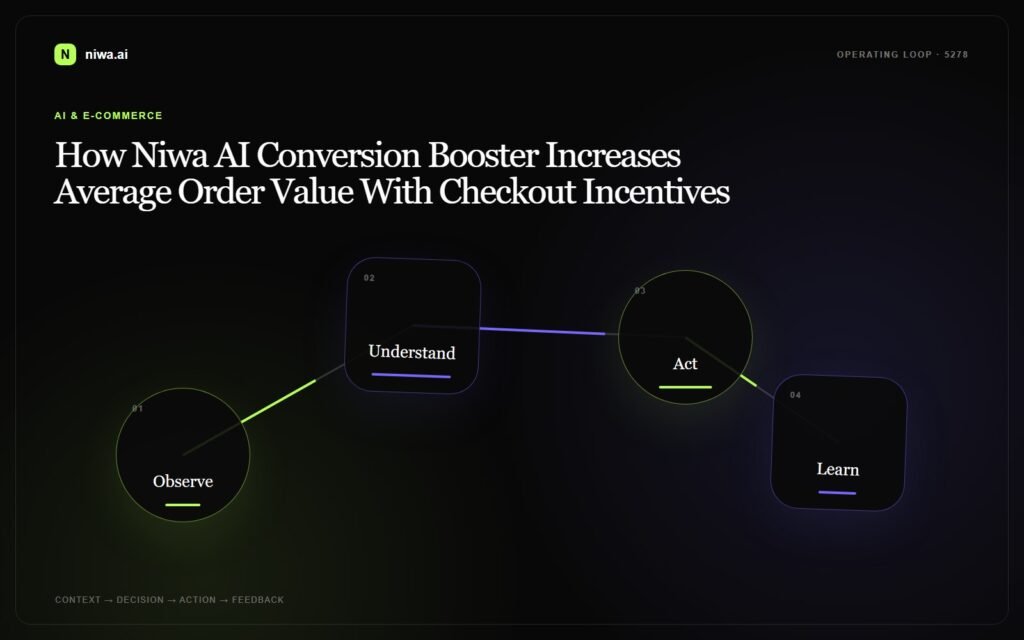
Niwa watches the buying journey inside a WooCommerce store and uses cart context to decide when to help. The Conversion Booster logic can be configured around cart rules such as product count, cart value, product category, customer intent, or checkout hesitation.
- The shopper adds the first product to the cart.
- The shopper adds a second product, creating a stronger purchase signal.
- Niwa detects that the cart now qualifies for a checkout incentive.
- Niwa instantly presents a coupon or discount message inside the shopping flow.
- The customer sees the benefit before checkout friction can kill momentum.
- The store tracks whether the incentive lifted conversion rate, AOV, and revenue per session.
This is especially useful for stores with complementary products: skincare, supplements, fashion, home goods, electronics accessories, pet products, gifts, and any catalog where customers often buy more than one item when the right recommendation is placed in front of them.
Why instant incentives beat manual coupon hunting
Manual coupon codes add friction. The customer has to remember the code, copy it, paste it, and hope it works. Worse, a visible coupon field can make shoppers leave checkout to search Google for a better code.
Shopify’s discount strategy research highlights why automatic discounts matter: automatic discounts are more seamless than codes customers must enter manually, especially on mobile, because they do the work for the customer.
Voucherify’s guide to cart-size discounts makes the same practical point: cart discounts can be triggered by minimum spend, specific products, product combinations, or cart contents, and they are applied automatically based on the customer’s shopping cart and order context.
Niwa brings that idea into an AI-assisted buying experience. Instead of only applying a silent backend rule, Niwa can communicate the incentive clearly:
- “You added two products, so you unlocked 10% off your order.”
- “Complete checkout now and your discount is applied automatically.”
- “Want to add a matching product and keep the discount?”
- “Your cart qualifies for a limited checkout incentive.”
The store should recognize the right moment and bring the incentive to them.
The conversion logic: increase AOV without destroying margin
Discounts are dangerous when they are random. If every visitor gets the same coupon immediately, the store may train customers to wait for discounts and reduce profit on orders that would have converted anyway.
The Conversion Booster approach is more controlled. It rewards behavior that supports the store’s goal. In this case, the goal is higher AOV. The discount appears only after the shopper adds a second product, which means the store is encouraging a larger basket instead of discounting the first item too early.
A good setup should define:
- Trigger: two products in the cart, specific bundle, minimum cart value, or category combination.
- Incentive: percentage discount, fixed discount, free shipping, gift, or next-order coupon.
- Margin guardrail: exclude low-margin products, sale products, or specific categories when needed.
- Timing: show the incentive immediately after the qualifying behavior, not five minutes later.
- Measurement: compare AOV, conversion rate, coupon usage, and profit before and after the rule.
Why this matters for WooCommerce stores
WooCommerce gives store owners flexibility, but most stores still rely on static popups, generic coupon banners, or basic related products. Those tools can work, but they do not understand the shopper’s current moment.
Niwa AI is built around the opposite idea: the assistant should react to live buying intent. If the customer is asking questions, Niwa guides them. If the customer is comparing products, Niwa explains the difference. If the customer starts building a bigger basket, Niwa can activate a conversion incentive.
That makes the checkout journey feel less like a transaction and more like assisted selling:
- guide the customer to relevant products,
- reduce hesitation before checkout,
- reward larger carts at the right moment,
- increase AOV from existing traffic,
- and keep the experience simple on mobile.
The best incentive is the one the customer understands instantly
A checkout incentive should be simple enough to understand in one sentence. If the shopper needs to read terms, exclusions, hidden rules, and complicated thresholds, the offer loses power.
For a two-product cart trigger, the message can be direct:
That is clear, immediate, and connected to the customer’s action.
The store owner can then test different versions: 5% off, 10% off, free shipping, a small gift, or a coupon for the next purchase. The important part is not the discount size. The important part is that Niwa offers the incentive at the exact moment it can change behavior.
Final takeaway
The Niwa AI Conversion Booster is not just another coupon popup. It is a smarter way to connect cart behavior, AI assistance, and checkout incentives.
When someone adds two products to the cart, the store has a perfect opportunity: the customer is already interested, the cart is already growing, and a small, well-timed incentive can help turn that momentum into a higher-value order.
That is how ecommerce stores increase Average Order Value without making the shopper feel pressured. The customer gets a relevant reward. The store gets a better basket. The checkout becomes easier to complete.
Want Niwa AI to increase AOV in your WooCommerce store?
Niwa AI can help you recommend products, answer customer questions, and trigger checkout incentives when shoppers build bigger carts.