

What Is Search Intent?
Search intent is the task behind a query. Learn how to distinguish learning, comparison and action, and choose a page that actually helps the reader.
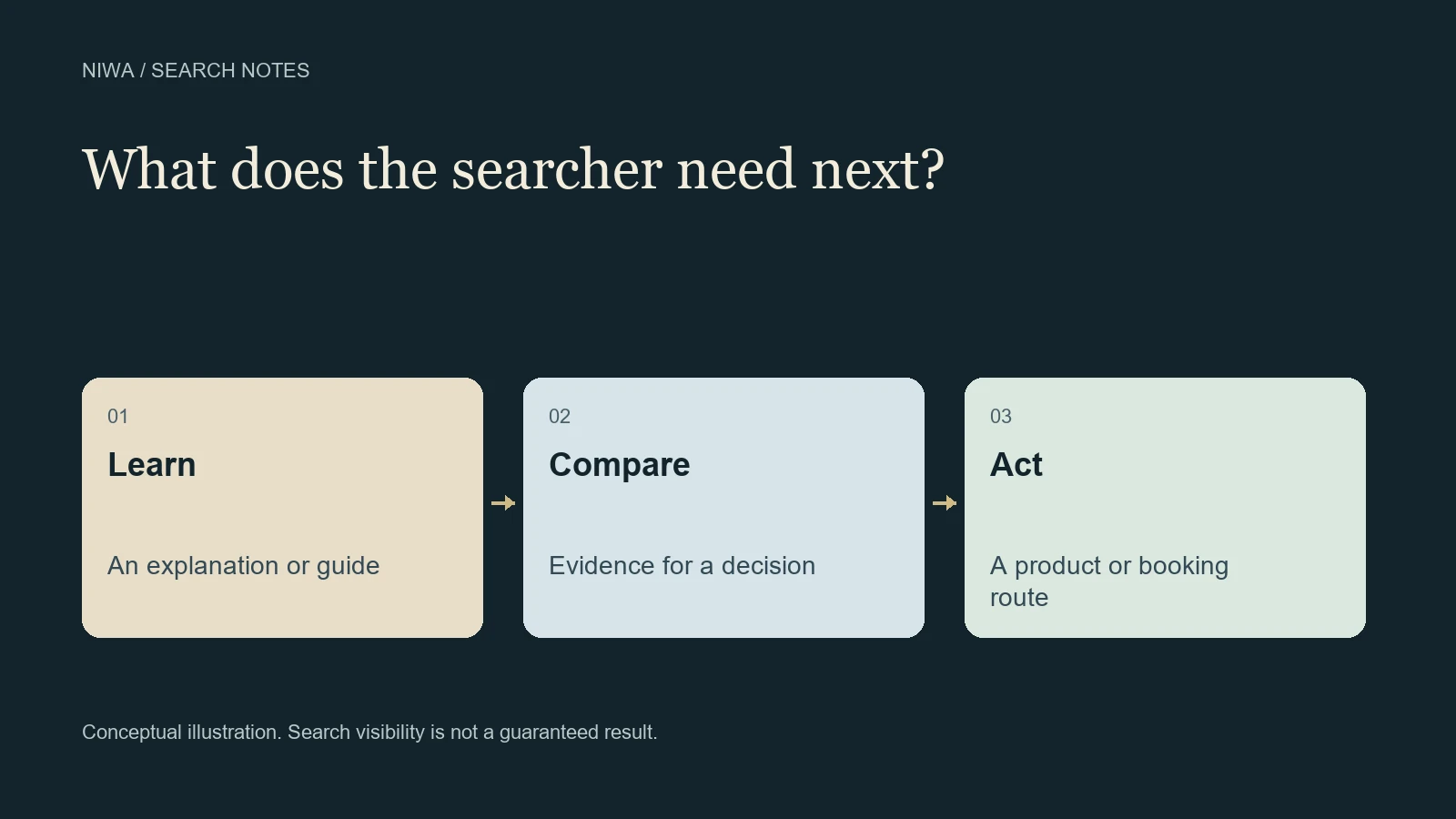
Search intent is what a person is trying to accomplish when they make a search. They might want an explanation, a particular website, a comparison or a way to buy or book. Understanding that task helps you decide what a page should answer and what action, if any, belongs next.
The wording is evidence, not a complete description of the person's circumstances. The same short query can serve different needs. You interpret it through context and the information a useful answer would require.
Niwa can help an owner turn approved business information into supported WordPress content changes. Its owner and customer workflow gives that content a business context. The owner still needs to decide whose question the page should resolve.
The topic is not the whole task
Three searches can mention the same product and need different pages. Consider these hypothetical examples:
- What is a standing desk? needs a definition and an explanation of how it is used.
- Standing desk versus desk converter needs a comparison of practical differences.
- Buy a standing desk for a small room needs suitable products, dimensions, price and purchase details.
A long definition can answer the first search and frustrate the third. A product page can help with buying while giving too little explanation to someone who has never encountered the concept.
This is why intent matters before writing. It helps determine the page format, the evidence needed and the next step. The purpose is to match a reader's need, not to hide an educational answer behind a sales form.
Common categories provide a starting point
SEO practitioners often describe four broad categories:
Informational: the reader wants to learn or solve a problem. A definition, guide or troubleshooting explanation may fit.
Navigational: the reader wants a specific site, brand or page. They may already know the destination and need to reach it.
Commercial investigation: the reader is evaluating options. A useful comparison explains fit, costs, limitations and practical differences.
Transactional: the reader wants to act, such as purchasing, downloading or reserving something. The page needs the information and interface required for that action.
These categories are working labels, not proof that every person using a phrase falls into one group. Local needs and mixed intent can cut across them. Someone comparing tutors may also need providers in a particular area.
How do you assess the likely intent?
Read the query as a real request. Ask what a satisfactory answer would let the person understand or do. Then examine relevant current results and note what kinds of pages appear: guides, category pages, individual products, maps or comparisons.
Results are useful evidence about what the search engine currently considers relevant. They are not a command to copy competing pages. The task can vary by country, language, device and date, so record the context when making an observation.
Google's explanation of ranking results describes how it considers the meaning of a query and other signals. Its ranking systems guide also describes language understanding systems. Exact phrasing alone does not capture the full relationship between a query and a page.
Use real customer questions where you have them. Those questions may reveal a missing detail, such as whether a product fits a particular room. Do not manufacture customer quotes or turn a handful of comments into a claim about every buyer.
Match the answer and the next action
For a definition page, answer the question immediately and use an example that makes it understandable. An optional product link can follow after the reader understands the subject.
A comparison needs a fair basis. Specify which products or plans you compare, verify current details and explain which tradeoffs affect the decision. Saying one option is superior without identifying the task adds little value.
A transactional page needs the actual means to proceed. A booking page should show the genuine service and booking route. A product page should make relevant details and the purchase process available. A button labeled Book does not prove a reservation was completed.
Two pages can share a topic and serve different purposes. Conversely, two titles can sound different while delivering the same generic answer. Merge or clarify the page roles when there is no material difference in the reader's task.
Use Niwa to improve a page with a defined job
Start with one page and one intended reader. On an existing WordPress site, install and configure the plugin using the Niwa help guide, then connect the supported provider and authorized owner account.
For the fictional standing desk shop, the owner could provide verified dimensions and ask Niwa to clarify the small-room product page. A comparison article would need different source material, including the specific options and their differences. Approve the facts and inspect the saved page, rather than accepting fluent text as evidence of accuracy.
An AI-built website uses AI during construction. An AI-powered website uses an assistant after launch. Neither label tells you whether a particular page satisfies search intent. The visible answer still needs to fit the question.
What if visitors arrive but leave without acting?
Intent mismatch is one possibility, not an automatic diagnosis. A visitor may be researching rather than buying, or the page may have a broken form, unclear pricing or a poor mobile experience.
Search Console's Performance report can show which queries and pages receive visibility and clicks. Pair that evidence with page inspection and actual business outcomes. Analytics alone cannot tell you precisely what every visitor wanted.
If a page seems to answer the wrong question, send Niwa its URL and the customer task it should support. A clear page purpose makes the content change easier to review and prevents another generic article from covering the same ground.

