AI Upsell Assistant for Ecommerce: Increase AOV Without Annoying Buyers
Increase average order value with AI upsell and cross-sell conversations that feel helpful, relevant, and grounded in buyer intent.
Why most upsells feel wrong
Upsells fail when they feel like a store is interrupting the buyer instead of helping them. A shopper adds one item to the cart and suddenly sees unrelated bundles, countdowns, popups, and discount prompts. Sometimes that works. Often it creates friction.
An AI upsell assistant takes a different approach. Instead of showing the same offer to everyone, it reads intent from the conversation, cart, product page, and buyer questions. Then it suggests an upgrade, add-on, bundle, or complementary product only when it makes the purchase more complete.
The difference is important. A static upsell says, “Buy more.” A good AI upsell says, “If you are buying this for that use case, you may also need this.” That feels less like pressure and more like guidance.
This approach works especially well when connected to an AI personal shopper, an AI product comparison assistant, and an AI checkout assistant. The assistant can guide the buyer from discovery to cart while keeping recommendations relevant.
The best upsell starts with buyer intent
The strongest upsells are not based only on product popularity. They are based on why the buyer is shopping. Someone buying a product for a gift has different needs than someone buying for professional use. Someone replacing a broken item has different urgency than someone comparing premium options. Someone buying a starter kit may need education, not just add-ons.
An AI upsell assistant can ask lightweight questions such as:
- “Are you buying this for personal use or a gift?”
- “Do you already have the accessories you need?”
- “Would you prefer the best value option or the longest-lasting option?”
- “Is this for one person, a team, or a client?”
- “Do you want the simplest setup or the most complete bundle?”
The goal is not to interrogate the shopper. The goal is to avoid irrelevant recommendations. One smart question can improve the entire cart.
Where AI upsells work best
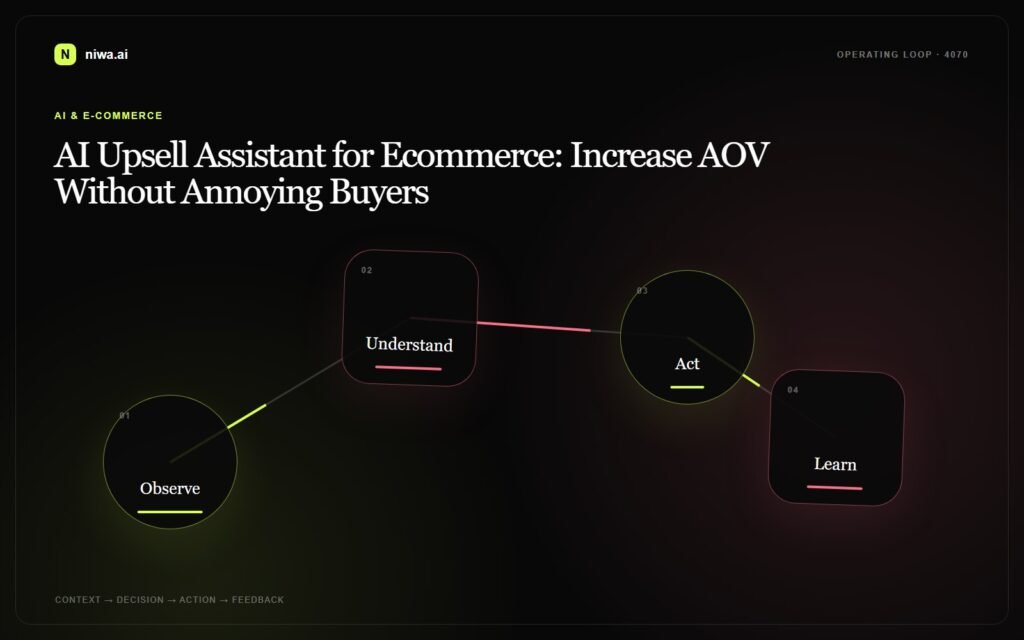
AI-powered upsells are useful across the buying journey, but they are strongest in a few specific moments.
On product pages, the assistant can explain why a premium model may be better for a specific use case. During comparison, it can clarify the trade-off between a cheaper and more durable option. In the cart, it can suggest missing accessories or bundles. At checkout, it can answer last-minute doubts and recommend a protection plan, refill, spare part, or faster shipping only when relevant.
This is close to the logic behind AI chat triggers. The assistant should not push offers blindly. It should step in when there is a clear signal: repeated product comparison, high cart value, compatibility questions, accessory searches, or hesitation around checkout.
For example, if a shopper asks whether a camera works in low light, the assistant might suggest a lens or lighting accessory. If someone buys a skincare product, it might recommend the routine step that comes before or after it. If someone buys a business tool, it might suggest a higher-tier option based on team size.
Cross-sell without confusing the customer
Cross-sells can hurt conversion if they add too many choices. A shopper who finally decided on one product should not be thrown into a new maze. The assistant should present one or two clear options with a short reason.
A good recommendation might sound like: “Since you chose the compact version for travel, I would not recommend the largest accessory kit. The smaller case is the better match.” That kind of advice builds trust because the assistant is not always pushing the highest-priced item.
The best upsell assistants sometimes recommend not buying an add-on. That may sound counterintuitive, but it protects credibility. When shoppers trust the assistant, they are more likely to accept future recommendations.
Protecting margin and customer trust
Upsell strategy often overlaps with discount strategy. If the buyer hesitates because of price, a store may be tempted to offer a coupon. But sometimes a better path is to explain value, offer a bundle, or recommend a lower-priced option that still fits the use case.
That is where an AI upsell assistant can work alongside an AI discount assistant. Discounts should not be the only tool for saving a sale. Sometimes the right add-on increases perceived value. Sometimes a bundle improves convenience. Sometimes the honest answer is a cheaper product that prevents regret.
To protect margin, the assistant should follow clear rules: which products can be bundled, which discounts are allowed, which add-ons are high priority, and when to route a high-value buyer to a human.
What to measure
The obvious metric is average order value, but it is not the only one. AOV that rises while returns and complaints rise is not a win. Measure:
- accepted recommendation rate
- cart value after assistant conversations
- conversion rate for assisted carts
- return rate for upsold items
- support tickets about compatibility or unwanted add-ons
- repeat purchase behavior from assisted buyers
The best upsell system grows revenue while making the purchase feel more confident.
Bottom line
An AI upsell assistant helps ecommerce stores increase AOV without turning the store into a wall of popups. It recommends upgrades, add-ons, and bundles based on intent, not pressure.
When the assistant understands the buyer’s goal, product compatibility, inventory, and checkout context, upsells become useful advice. That is the version shoppers accept: not “buy more,” but “buy the right complete setup.”