

Do I Need Both Meta Pixel and Conversions API?
Decide whether Pixel and Conversions API both fit your website. Compare browser and server signals, deduplication, privacy requirements and maintenance effort.
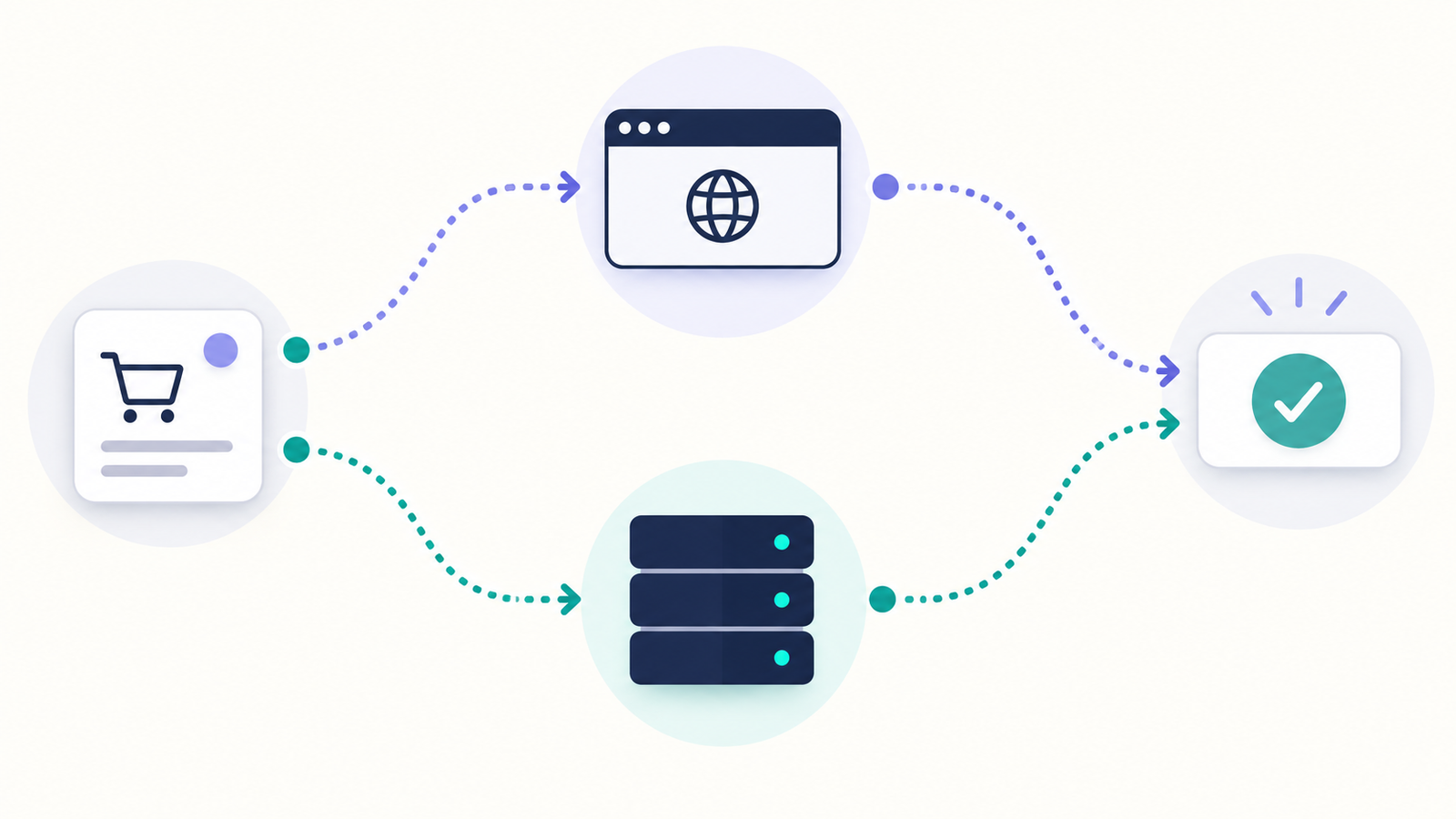
For many websites advertising on Meta, using both Pixel and Conversions API is a sensible choice. Meta recommends the combined approach because browser and server events provide complementary routes for reporting customer actions. You still need accurate triggers, permitted data collection and deduplication. Two connections reporting the wrong event are not better measurement.
You do not need to build a custom server system merely because CAPI exists. First check whether your current website integration already supplies both routes and whether it represents your actual conversions correctly.
If Niwa helps customers choose products or reach your website booking flow, measure the completed order or reservation that follows. Decide how to send those outcomes based on the store or scheduler's integration, not on whether the site was created with AI.
What each route contributes
Meta Pixel reports from the visitor's browser. It can record page and product views alongside conversion actions. Browser restrictions or a customer leaving the page can affect what arrives.
Conversions API reports through a server or supported business integration. It can send an outcome the business system has saved even when the browser path is incomplete. It has its own failure points, including credentials, queues and incorrect trigger logic.
Meta explains the combined recommendation in its Pixel and server deduplication documentation. This is a recommendation about signal delivery, not a promise that your reports will match accounting or that advertising will become profitable.
When both are a practical fit
Use the combined approach when you advertise regularly, your website has meaningful conversion events and a maintained integration can coordinate them. This is often practical for a store with saved order records or a service business with confirmed appointment records.
Check that the integration supports your current checkout or booking system. It should preserve one event identity, respect relevant consent choices and expose enough diagnostics to verify delivery.
For example, a paid WooCommerce order may be reported by browser and server. Both messages should describe that same order. Niwa's WooCommerce tools can support the customer and owner workflow around the store, while the tracking integration handles event delivery.
When to fix the existing setup first
If your Pixel sends Purchase when someone merely opens checkout, adding CAPI can repeat that mistake on another route. Correct the trigger before expanding delivery.
If two plugins already send browser events, adding a third integration makes ownership less clear. Inspect the existing senders and remove or reconfigure the overlap through the relevant integration settings.
If the final conversion happens in an external scheduler you cannot instrument, a server container on your own website does not automatically solve that gap. Ask the scheduler what success callbacks or supported integrations it provides.
For a site that is not running Meta advertising, the immediate need may be business records and ordinary website analytics. Avoid collecting advertising data solely because a setup guide offers a toggle.
The requirement that makes both work together
For a browser and server pair, Pixel's eventID must match CAPI's event_id, and the event names must match. Meta also describes the same data-source and timing requirements in its official deduplication guide.
Generate one identifier for one genuine conversion and preserve it across reports and retries. A second order or booking needs its own identifier. A new random ID on every send can make repeat messages look like new outcomes.
Check the names too. Lead from the browser and Schedule from the server describe different event types, even if you attach the same identifier.
Privacy applies to both routes
Server-side delivery is not a workaround for a visitor's refusal of advertising tracking. Configure the integration for the applicable permissions, avoid unnecessary personal data and explain the relevant sharing in your privacy information.
The ICO's UK cookie guidance explains consent and the narrow exceptions for device storage and access. Check the rules for the markets you serve rather than applying one country's rules globally.
Keep tokens on the server and exclude chat transcripts and sensitive appointment details from advertising events. A booking event should describe the conversion, not disclose why someone needs a private service.
Count the maintenance work before choosing a route
A supported plugin may be simpler than a custom implementation. A custom or hosted server route can still be appropriate, but someone must maintain credentials, logs, retries and compatibility as services change.
Compare the actual scope and costs of the integration, hosting and support. Do not judge the choice only by the presence of a CAPI checkbox or an event-match score. Those do not prove correct conversion semantics or deduplication.
Make the decision with a controlled test
Complete one order, enquiry or reservation and inspect the record in your business system. Use Meta Test Events to inspect the browser and server reports, then verify the shared identity and outcome.
Test a rejected action and revisit the confirmation page. If those create extra successful conversions, fix the implementation before treating the combined setup as finished.
For service businesses, Niwa's booking workflow gives the customer a route from service questions to a saved website reservation. An AI-powered site supports that ongoing process; an AI-built site describes how the page was created.
Niwa Business is USD 150 for a custom WordPress website or migration, hosting, maintenance and AI adaptation. Existing sites can use the standalone plugin. Contact Niwa with your current business workflow and tracking integration to discuss the website assistance you need alongside measurable outcomes.

