

Can AI Answer Questions About Cleaning Services?
AI can explain cleaning inclusions, extras and coverage when the business supplies accurate information and a clear route to a person.
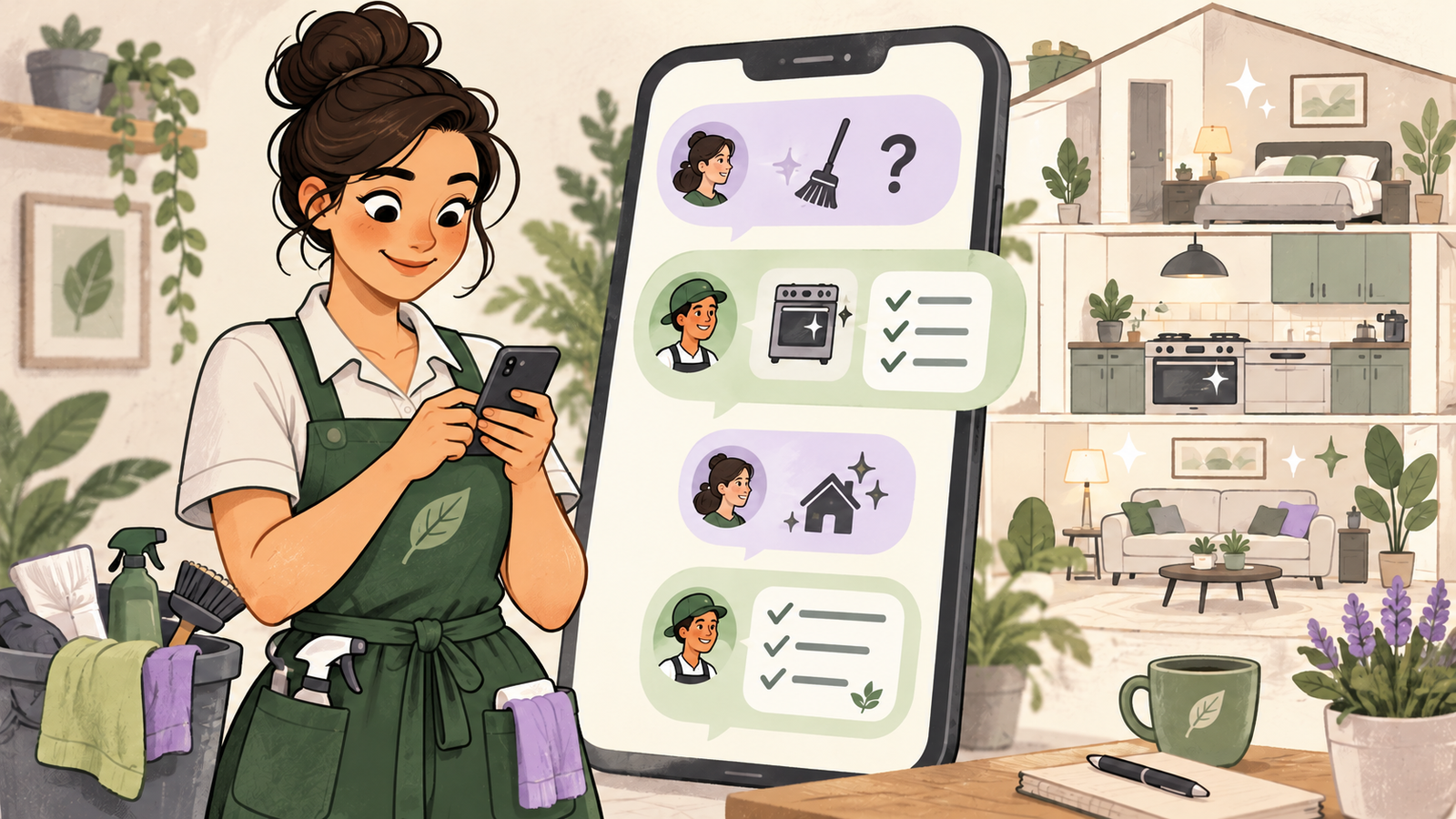
Yes. AI can answer questions about cleaning services when it has accurate information about your business and clear limits on what it may promise. Niwa uses your WordPress content and business information to explain services, clarify quote requests and guide customers to the next step on your website or WhatsApp. Your team handles questions that need inspection or a decision beyond the published service.
The useful test is whether a customer receives the right answer about your work. An AI-created page does not necessarily provide an assistant that can use the business's current service information after launch.
Start with questions your service pages can answer
Prepare clear information about inclusions, exclusions, extras, coverage, working hours and how customers request a quote. Explain the difference between a maintenance clean and a first deep clean in terms of the tasks you actually offer.
Useful customer questions might include whether you clean inside an oven, bring equipment or work while someone is home. Answer these in your business information before asking the assistant to handle them. If the policy varies by service, record that distinction.
Keep prices attached to the service they describe. A price for a defined maintenance package should not appear to cover an unassessed move-out clean. Explain when a site visit or extra information is needed.
Give the assistant a source it can keep current
Use the Niwa website assistant with the service content and business rules for your site. During setup, confirm which pages and information it can access. Include the contact route for questions your team needs to handle.
Choose a person responsible for updating the information. When you stop offering a service or change an exclusion, revise the source and check that the customer-facing answer reflects it. Repeating an old answer consistently is still a problem.
Avoid conflicting versions of the same policy across pages. If the home page says oven cleaning is included and a package page says it is extra, resolve the disagreement before relying on the assistant.
Use clarification to make the answer relevant
Consider a hypothetical customer who asks whether you can clean their kitchen. Niwa can explain the listed kitchen tasks, then ask whether they mean routine surface cleaning, appliance interiors or a deeper first visit.
That clarification helps the customer select the right service or send a useful quote request. It should not be used to invent an exact job duration or final price when the property's condition is unknown.
The same applies to commercial premises. An answer about an ordinary office should not automatically cover specialist environments or tasks your team has not accepted. Keep the scope attached to the actual request.
Define when a person should respond
Send questions about uncertain surfaces, damage, unusual contamination or unlisted specialist work to the responsible team. The assistant can collect a description and explain how an assessment is arranged. It should not improvise a promise that your team can safely perform the work.
Give customers a visible way to contact you. A service question should not force them to repeat a long conversation if a short call or assessment will resolve it.
Use the same care with guarantees and credentials. If you do not have a published guarantee for a particular outcome, the assistant should not create one to reassure a customer.
Connect the answer to an appropriate action
After explaining a defined service, guide the customer to a quote request or a suitable website appointment. If the job needs inspection, book an assessment rather than presenting it as confirmed cleaning work.
On WhatsApp, Niwa answers using your business context, offers configured availability and can record the appointment the customer selects. Confirm that the booking is saved before treating a preferred time as a reserved visit.
Test answers against the real service
Try a normal inclusion, a separately charged extra, a location outside coverage and a question with an ambiguous property description. Compare each answer with the source information. Test a request in a language your customers use, checking the meaning and service scope rather than a literal English wording.
Also ask about something you do not offer. A useful response should acknowledge the missing information and provide the contact route. Review customer questions after launch to identify information that needs clarification on the site.
Send Niwa your service list and common questions. Existing WordPress owners can add the standalone plugin; a new site is not required simply to provide service assistance.

