AI Order Tracking Assistant for Ecommerce: Cut WISMO Tickets Before They Grow
Use an AI order tracking assistant to reduce WISMO tickets, reassure customers after checkout, and escalate only real delivery issues.
Online stores lose a surprising amount of support capacity after the sale. The customer has already paid, but the conversation is not over. They still want to know whether the order was received, when it will ship, why tracking has not moved, what happens if delivery fails, and whether they can change an address before the parcel leaves the warehouse.
That is why an AI order tracking assistant is one of the most practical ecommerce AI use cases. It does not need to replace the support team. Its first job is simpler: answer routine order-status questions instantly, collect the right context, and escalate only the cases that actually need a human.
If your store already uses AI for checkout confidence, post-purchase care, inventory questions, or product choice, order tracking is the natural next layer. It connects the promise made before checkout with the experience the customer receives after payment.
Why WISMO questions are expensive
“Where is my order?” looks like a small question, but it is rarely small at scale. A shopper sends one message through live chat, another through email, and sometimes a third through Instagram because they are anxious. The team then checks the order, opens the shipping platform, copies a tracking link, explains the carrier status, and reassures the customer.
Multiply that by hundreds of orders and the hidden cost becomes clear. The support team spends time repeating the same answers while urgent cases wait longer.
An AI order tracking assistant reduces that pressure by handling the first layer of post-purchase communication. It can confirm that the order exists, explain the current status, share the tracking link, and tell the customer what the next normal step is. When the case is unusual, it can prepare a clean escalation with order number, customer email, shipping method, carrier status, and the customer’s exact concern.
For broader post-sale strategy, this works especially well alongside an AI post-purchase assistant that keeps customers informed after checkout instead of leaving them to guess.
What the assistant should answer instantly
A useful order tracking assistant should be able to respond to the most common post-purchase questions without making the customer search through emails. Typical examples include:
- “Did my order go through?”
- “Where is my package?”
- “Why has tracking not updated?”
- “Can I change my delivery address?”
- “When will this arrive?”
- “What happens if I am not home?”
- “The carrier says delivered, but I do not have it.”
The best answers are not just raw tracking events. A customer does not want to decode carrier language. They want a plain explanation: your order has been packed, the label was created, the parcel is waiting for carrier pickup, the package is in transit, or the delivery attempt failed.
That difference matters. A tracking page gives data. An AI assistant gives context.
Connect order tracking to customer intent
Order tracking is not only a support function. It can also protect revenue. A worried customer who gets a fast, clear answer is less likely to cancel, open a dispute, or leave a negative review. A satisfied customer is more likely to buy again.
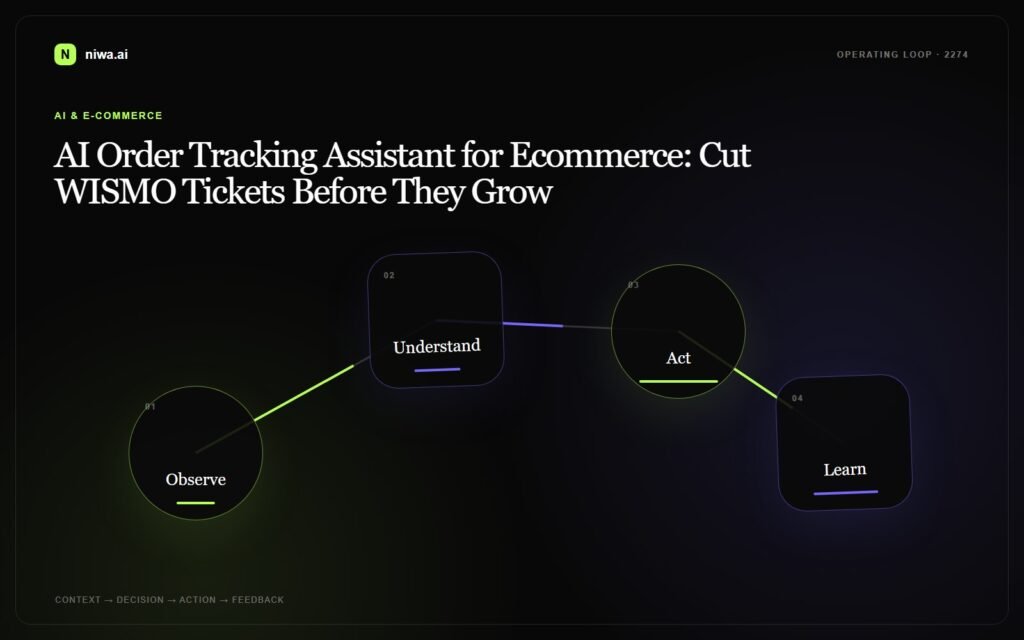
This is where Niwa-style automation becomes valuable: the assistant should understand the customer’s intent, not only the order status. Someone asking “why is this late?” needs reassurance and a next step. Someone asking “can I add another item?” may need a sales handoff. Someone asking “is this still in stock?” may connect to stock and restock logic, similar to an AI inventory assistant that turns availability questions into purchase intent.
When the assistant understands the difference, it can choose the right action: answer, escalate, offer a link, tag the conversation, or notify the team.
Reduce panic after payment
A lot of ecommerce anxiety appears after the buyer has already paid. Payment confirmation, shipping timelines, and delivery expectations all influence trust. If the store is silent, customers fill the gap with doubt.
That is why order tracking should connect with the checkout and payment experience. If a customer had doubts before buying, a smooth post-purchase flow reassures them that the store is reliable. If they paid by a method that takes time to confirm, the assistant can explain what is normal and when the team should intervene.
This is especially useful when paired with an AI payment assistant that removes uncertainty before checkout. Together, the two assistants cover a critical trust path: “Can I safely pay?” and “What happens after I pay?”
Escalate only the cases humans should handle
The goal is not to hide human support. The goal is to protect it. A good AI order tracking assistant should escalate when:
- the carrier status is inconsistent or missing for too long
- the customer reports a delivered package they cannot find
- the address needs changing after fulfillment started
- the order contains high-value or fragile items
- the customer is angry, confused, or asking for a refund
- the policy depends on location, shipping method, or product category
When escalation happens, the assistant should not simply say “someone will contact you.” It should pass a useful summary to the team. That summary saves time and makes the human reply better.
Make the assistant proactive, not only reactive
The strongest setup does not wait for customers to ask. It can send or prepare proactive updates when order status changes: confirmed, packed, shipped, delayed, out for delivery, delivered, or returned to sender.
This can also support retention. After delivery, the assistant can suggest setup instructions, care tips, relevant accessories, or a repeat-purchase path. The trick is to keep it helpful, not pushy. The order tracking flow should earn trust first; sales moments should come only when they make sense.
For stores with many similar products or replacement options, this can connect naturally with an AI product comparison assistant when customers ask whether they should order another model next time.
What to measure
To prove value, track more than chatbot activity. The important metrics are business and support outcomes:
- reduction in WISMO tickets
- faster first response time
- lower duplicate messages per order
- fewer refund or cancellation requests caused by uncertainty
- higher post-purchase satisfaction
- repeat purchase rate after delivery
- percentage of escalations with complete context
If these metrics improve, the assistant is not just answering questions. It is making the whole post-purchase experience calmer and more efficient.
Bottom line
An AI order tracking assistant is a practical way to reduce support load while improving customer confidence after checkout. It gives shoppers fast explanations, keeps the team focused on real exceptions, and turns order status from a source of anxiety into a source of trust.
For ecommerce brands, this is often one of the easiest AI automations to justify. The questions are frequent, the data is structured, and the customer impact is immediate. When order tracking, payment support, inventory answers, and post-purchase care work together, the store feels more responsive without forcing the team to manually repeat the same answers all day.