

How to Choose a Conversion Event for a Meta Campaign
Choose a Meta conversion event that reflects your business goal. Compare leads, appointments and purchases, verify signal quality and avoid optimizing for clicks.
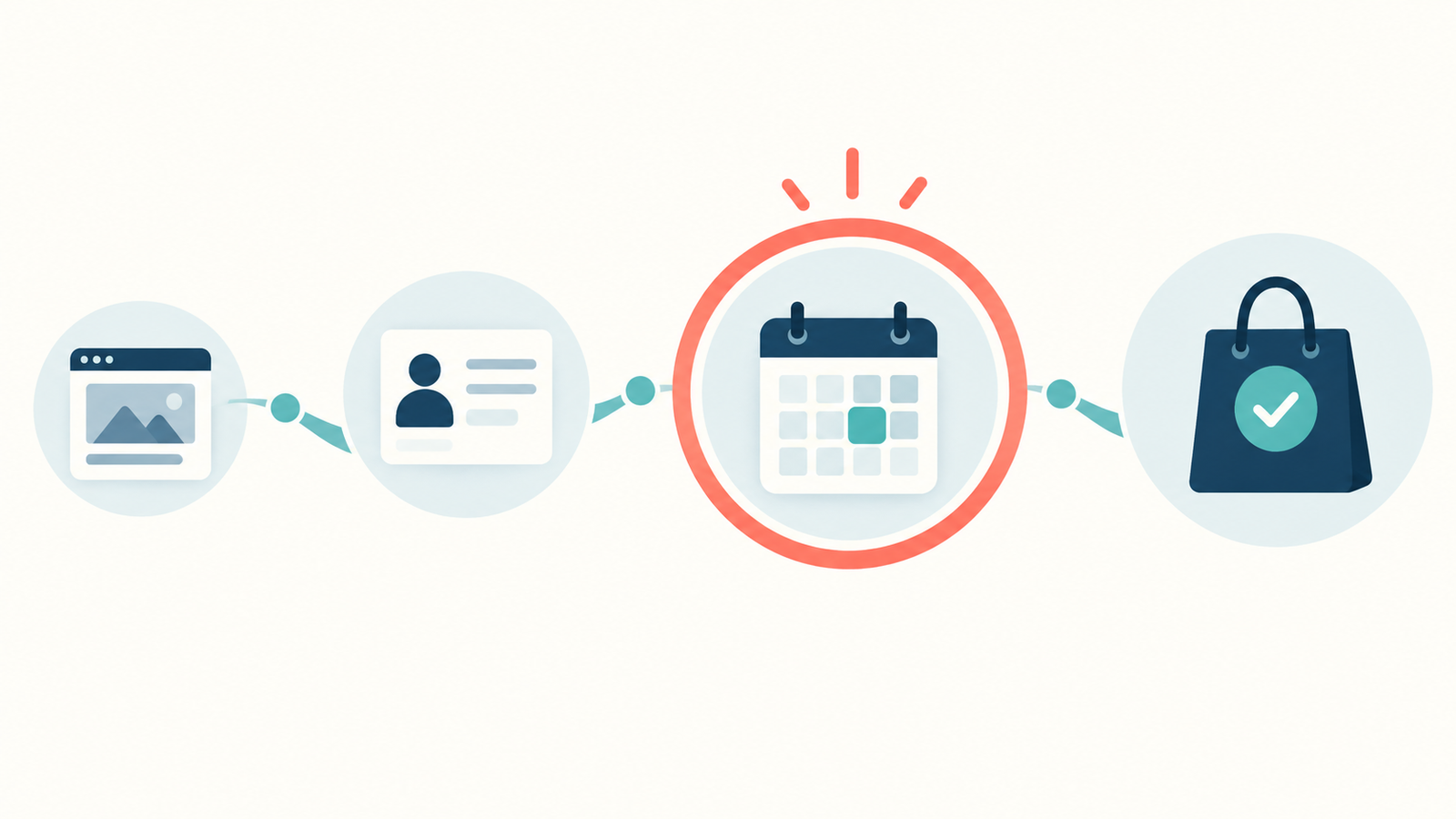
Choose the conversion event that represents the business outcome you want the campaign to produce and that your website can measure reliably. For a store selling products, that is usually Purchase. For confirmed appointments, consider Schedule. For accepted sales enquiries, use Lead. Check the available options for your campaign objective, conversion location and data source before making the selection.
An event is more than a reporting label. In a conversion-focused setup, it helps define the result the advertising system should optimize toward. Choosing a frequent but irrelevant action can produce activity without the customers you wanted.
On a website using Niwa, the customer may ask questions before buying or booking. Pick the completed business outcome, not the mere opening of the assistant, unless your explicit goal is to measure that earlier interaction.
Write the business goal before opening the dropdown
Describe what a useful result means. A retailer might want completed purchases of its products. A salon might want saved appointments for available services. A consultancy might want enquiries its team can assess and contact.
Those outcomes happen at different points. A submitted enquiry is not a qualified prospect, and a booked appointment is not an appointment attended. Choose the acquisition milestone you can measure, then evaluate later quality in your business records.
If the goal is sales, record sales as a separate outcome even when you also measure product views and cart activity. Do not rename an earlier step to make the results column look fuller.
Match the event's meaning to the actual action
Meta's standard event reference defines the events you can send. Useful examples include:
ViewContentfor a relevant page or product view.AddToCartfor a product added to a shopping cart.Leadfor the lead outcome you have consistently defined.Schedulefor a completed appointment booking.Purchasefor a completed purchase, with value and currency.
Keep these distinctions in the tracking implementation. A button labelled "Buy" is not a purchase if the payment fails. A calendar slot selected is not a booking if the reservation is rejected.
For a website powered by Niwa's booking workflow, a saved reservation provides a concrete milestone. The conversion sender still needs to connect to that successful booking result.
Confirm the campaign is using the correct source
The event must belong to the data source connected to your website and accessible to the ad account. Check the data-source identity, campaign objective, conversion location and the event options currently available.
Meta's ad-set reference documents the relationship between optimization goals and attribution configuration. Available settings depend on the campaign setup; do not assume every account shows an identical dropdown.
If your intended event is missing, inspect permissions and actual event activity on the correct source. Also check the integration and campaign options. Selecting an unrelated event to get past the setup screen changes what the campaign is being asked to achieve.
Assess signal reliability before signal frequency
A useful conversion event should fire when the intended outcome succeeds, stay silent when it fails and avoid repeat counting. Check browser/server deduplication if both paths report it.
Then consider how often the business produces that outcome and whether the campaign can gather useful feedback. A small business may have few purchases or bookings. That is a planning constraint, not a reason to fabricate conversions.
If you deliberately test an earlier event because the final outcome is scarce, keep the final outcome in your evaluation. Treat it as an experiment with a different optimization target, rather than assuming cheaper cart additions will produce cheaper customers.
Use a small event map for each journey
For a store, distinguish product view, cart addition, checkout and completed purchase. For a service business, distinguish service view, enquiry, booking started and appointment saved.
Niwa's WooCommerce tools can support the product information and store workflow around a purchase. The event map should show where the customer completes the commercial action and where measurement merely records an earlier step.
If a reservation also includes a paid deposit, you may have both a booking event and a purchase event. Decide which result the campaign is intended to obtain. Do not add their counts together as if they represent different customers.
Check the choice against real records
Before launch, complete a controlled conversion and inspect it through Meta's testing workflow. Confirm the saved business record and the event's name, source, identifier and any value fields.
After launch, compare attributed results with qualified enquiries, attended appointments or paid orders as appropriate. A lead-generation campaign can appear efficient while producing enquiries outside your service area. An appointment campaign can bring bookings that frequently cancel.
Review that downstream quality before changing the optimization target. Changing it repeatedly also makes comparisons harder, so document what changed and when rather than attributing every later difference to the ad creative.
Keep private service details out of the event
Use clear event names and appropriate data. Do not build custom audiences or conversion labels that disclose sensitive customer circumstances. Meta's ad-set documentation describes restrictions on custom conversions and audiences suggesting prohibited information.
Respect the consent choices and legal obligations that apply to your visitors. The choice of optimization event does not create permission to send customer conversations or private booking reasons to an advertising platform.
Build the customer route around the selected outcome
An AI-powered website can answer questions and guide visitors after launch. An AI-built website describes how the page was created. The conversion event should measure what the customer completed in that ongoing journey.
Niwa Business is USD 150 for a custom WordPress website or migration, hosting, maintenance and AI adaptation. Existing sites can install the standalone Niwa plugin. Contact Niwa with your business goal and the customer process you want to support, so the website workflow can lead to a result you can verify.

