

How to Turn Customer Questions into Blog Posts
Turn a customer question into a blog post by identifying the decision behind it, checking whether your website already answers it and collecting the facts needed for a useful explanation.
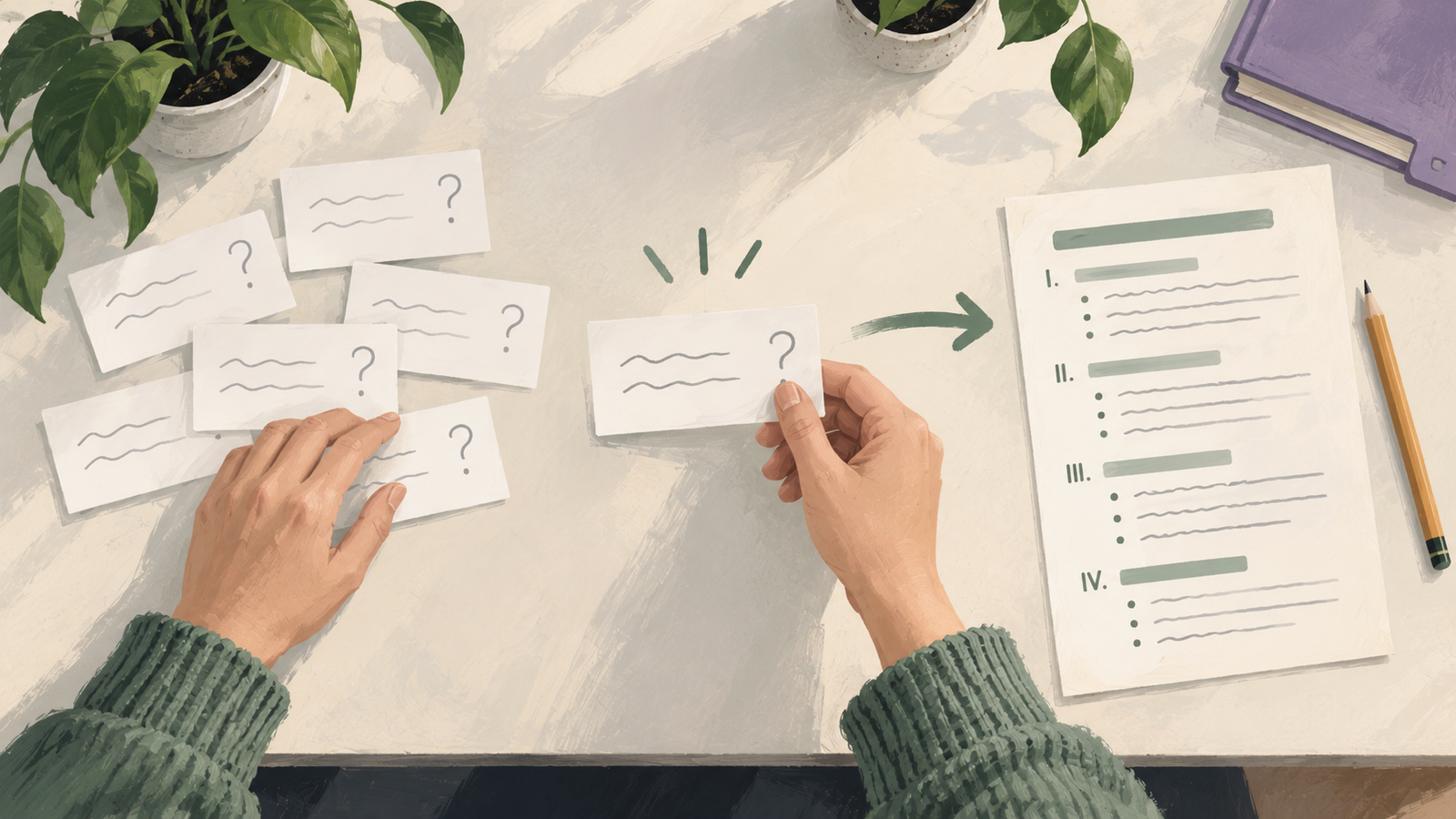
Turn a customer question into a blog post by identifying the decision behind it, checking whether your website already answers it and collecting the facts needed for a useful explanation. Write the answer first, then expand the conditions, examples and next steps. Niwa can help turn that brief into a reviewed WordPress draft through its SEO content workspace.
Repeated questions can reveal a missing explanation. They can also reveal a confusing checkout label or an outdated service page. Choose the fix that helps the customer complete the task; a new article is appropriate when the answer needs more space than the original page can reasonably provide.
Select a question with a clear reader decision
Start with questions from enquiries, support conversations, sales calls or your team's notes. Remove names, contact details, order identifiers and personal circumstances before using the material in a writing brief. Paraphrase the question rather than reproducing a private message.
Group questions by what the person needs to decide. Two people can ask very different questions while both trying to establish whether they need help assembling a delivery. Similar wording alone does not establish the same problem. Read the surrounding conversation and ask the person who handled it what the customer needed.
Choose one question that your business can answer accurately. Record the reader, the decision and the evidence you have. A useful brief might say: "People buying a flat-pack desk need to understand which delivery services include assembly and what they should arrange separately."
Check the existing website before creating another page
Find your delivery policy, product page, checkout explanation and any related guide. If a customer simply missed a hidden sentence, move or clarify that sentence. If the current answer is wrong, correct it at the source.
A blog post earns its place when it explains a broader decision: how to compare delivery options, what assembly involves and what to check before the parcel arrives. It should link to the current policy rather than creating a second, competing policy.
For WooCommerce businesses, Niwa's catalogue workspace can help inspect the relevant product information. The article still needs the actual delivery terms. A product description or an AI assumption cannot establish what a carrier has agreed to do.
Keep an existing article if it already serves this purpose. Update the missing section instead of publishing another page with almost the same answer.
Gather the facts that make the answer usable
Ask the responsible team member for the current service terms and any restrictions. Collect the details that would change the reader's decision:
- Which delivery option the explanation covers.
- Whether assembly is included, optional or unavailable.
- Where the service is offered and what the customer must arrange.
- Where the customer can see the applicable terms before ordering.
- Who can confirm an unusual request.
Date the evidence in your working notes. Keep policy statements linked to the business's own approved terms. Where you explain another organisation's service, read that organisation's current documentation and identify the applicable option.
Do not turn the number of support messages into a search-volume estimate. Search Console's performance report can show queries and pages already receiving search exposure. That is a different source of evidence from customer conversations, and neither guarantees demand for a new article.
Write the direct answer before the outline
Consider this illustrative question: "Does furniture delivery include assembly?" The example below is a writing exercise, not a real store's delivery policy.
Suppose the approved facts say that a desk arrives flat-packed and standard delivery does not include assembly. A direct opening would be:
Standard delivery for this desk does not include assembly. It arrives flat-packed, so arrange assembly separately before choosing a delivery date. Check the product's assembly instructions and contact the store if you need to confirm a particular service option.
The statement identifies the product and delivery option. It does not imply that every furniture retailer follows the same policy. If your actual terms offer paid assembly, replace the example with the verified option and its conditions.
Now build sections around the decisions still unresolved: what standard delivery includes, what assembly requires, where an optional service is available and what to confirm before ordering. Avoid expanding the article into an unrelated catalogue of furniture advice.
Give AI a bounded writing brief
Use a prompt like this, with your actual facts and links attached:
Draft an English blog article answering the attached customer question for people choosing a delivery option. Use the approved policy notes as the authority for business-specific statements. Open with the answer, explain the conditions and include a practical pre-order checklist. Link to the current policy. Mark missing information as a question for the editor. Do not quote customer messages, invent service terms or add claims about demand.
Review the outline before requesting the complete draft. It should answer the same question throughout. Google's people-first content guidance is a useful editorial reference: the reader should finish with enough information to accomplish their goal.
Read every business-specific sentence against the approved notes. Check that examples are labeled and that the call to action leads to the person or page able to resolve the remaining uncertainty.
Save, review and connect the finished article
Prepare a clear title, a short description and an image that supports the explanation. Use the customer's underlying question naturally; there is no need to copy awkward wording or expose the original conversation.
Ask Niwa to prepare the article as a draft, then inspect the saved post, internal links and mobile preview. Publication follows approval of that particular version. Place a link to the guide beside the relevant service or product information when it helps visitors find the explanation.
After release, ask the team whether customers can find and use the answer. New questions may show that a condition is still unclear. They are a reason to improve the explanation, not evidence that the post has delivered a particular sales result.
If you want help connecting customer questions with the content on your WordPress site, contact Niwa with an anonymized question, the existing page and the approved answer.

