

How to Track Whether My Ads Are Working
Track ad spend, genuine leads and paid sales with a practical measurement plan. Learn what to record, test and compare before changing your budget.
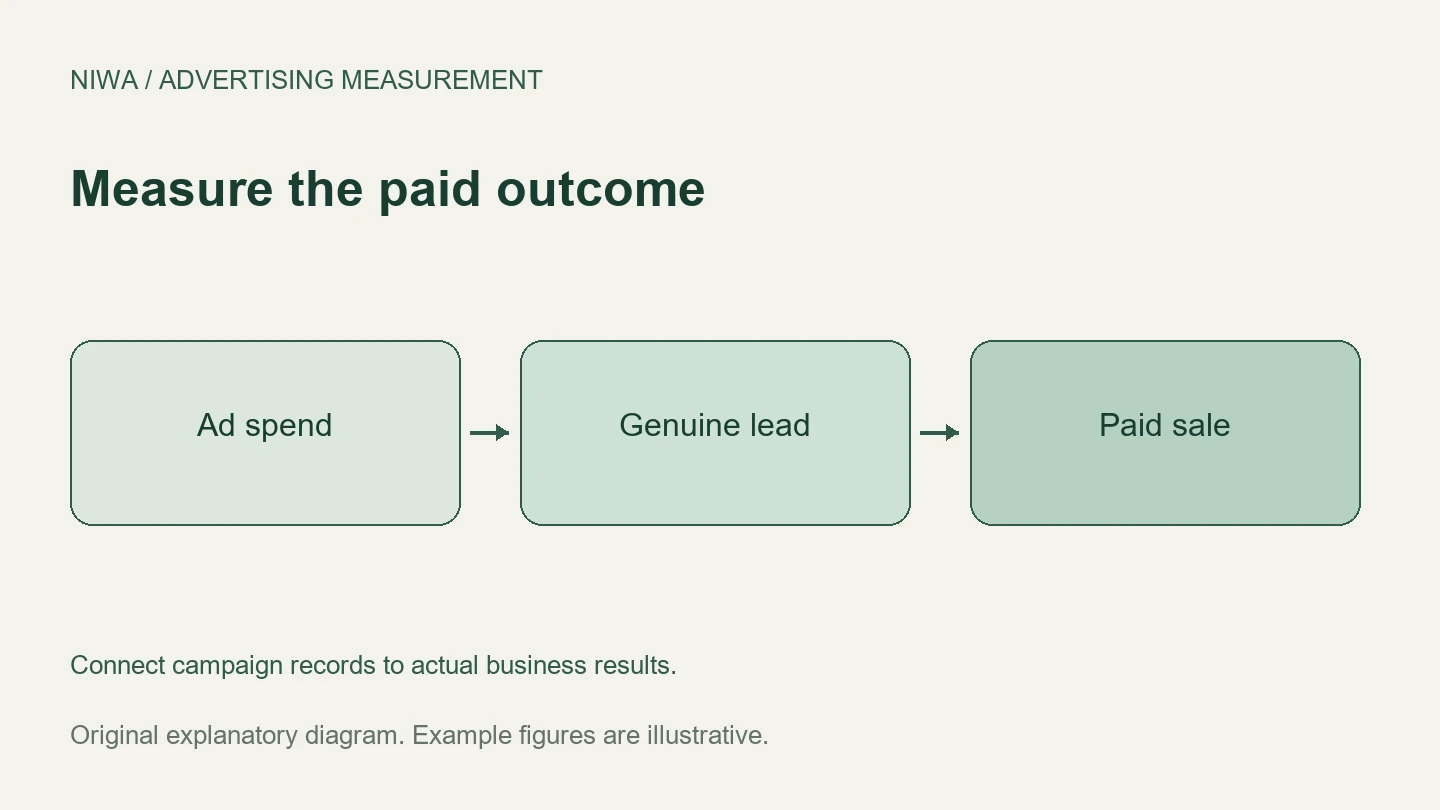
Track whether your ads are working by connecting each campaign’s spend to genuine enquiries, paying customers and revenue. Give ad links consistent source labels, measure confirmed website actions, and keep a sales record that shows which enquiries became paid work. Clicks help explain the journey, but they cannot tell you whether the campaign made money.
On a WordPress website, Niwa can answer visitors’ questions and help them reach a relevant product or booking step. That gives you a useful customer journey to measure. You still need campaign tracking and a dependable order or sales record to judge the outcome. See how Niwa works before choosing which actions to count.
Start with the result your business needs
A retailer might need completed, paid orders. A service business might need qualified enquiries that become paid appointments. A software company might need demo requests that turn into contracts. Decide on the business result before opening the advertising dashboard.
Record intermediate actions separately. A product view, chat opening, phone-link click and form submission represent different levels of progress. Counting all four as sales will give you an attractive report and an unreliable budget decision.
Define a genuine lead in writing. For example, an enquiry contains usable contact details, concerns a service you provide, and is not spam or a duplicate. The team should apply that definition consistently across channels and languages.
Label traffic before it arrives
For manually tagged campaigns, add UTM parameters to the destination link. Use a stable source, medium and campaign name, then a content value to distinguish individual ads. For example, a paid Facebook ad might use source facebook, medium paid_social, campaign autumn_service and content video_01.
Google’s campaign URL guidance explains where those values appear in Analytics. Use Google Ads auto-tagging where appropriate and preserve its click identifiers. Do not replace an existing working tracking configuration casually.
Test the full destination. Redirects, short links and external booking tools can lose information between the click and the conversion. A correct-looking ad URL is only the beginning of the check.
Measure the confirmed action
For a form, record successful submission rather than a click on the submit button. Validation errors should not produce leads. For a purchase, record the real order value and a stable transaction identifier. Google’s ecommerce measurement documentation describes the purchase data needed for that implementation.
For booking, distinguish a visit to availability from a completed reservation. Niwa uses your website’s business context to check availability and book appointments directly in a WhatsApp conversation. Track the saved reservation, then connect attendance and payment to that booking record. A booking completed in WhatsApp is not automatically a GA4 or Pixel website event; use the appropriate measurement connection for that channel.
An AI-built website may use AI during design or development. An AI-powered website uses it after launch to help customers complete tasks. Neither label proves better advertising results. The paid outcome is what settles the question.
Keep one sales ledger alongside the dashboards
Start with a spreadsheet or CRM containing a lead ID, enquiry date, source, campaign, ad identifier, owner, sales status, payment date and paid value. Keep private customer information in that controlled system rather than in public URLs or analytics event fields.
Use the same lead record through follow-up. If one person submits twice and later buys once, report one customer and one sale. Keep repeat purchases distinguishable from new customer acquisition.
A weekly review can use these columns:
| Campaign | Ad spend | Genuine leads | Paying customers | Paid revenue |
|---|---|---|---|---|
| Search example | $600 | 20 | 5 | $2,000 |
| Social example | $400 | 30 | 2 | $700 |
These are illustrative figures, not Niwa customer results. Search has a $30 cost per lead and $120 ad cost per paying customer. Social has a lower cost per lead, about $13.33, but a $200 ad cost per customer. The cheaper enquiry is not automatically the better business result.
Compare periods that have had time to produce sales
A lead received yesterday may buy next month. Compare lead cohorts that have had a similar opportunity to convert, and keep an operational view of payments received during the current period. Otherwise a slow sales cycle can make a new campaign appear unsuccessful too early.
Revenue also needs a clear definition. Decide how refunds, tax and shipping are handled. Use the same currency and date basis when calculating return on ad spend. Margin, fulfilment costs and sales effort determine whether the revenue is profitable.
Check the tracking before trusting the trend
Run a tagged test visit and a clearly marked test enquiry or order. Confirm that the source survives, the event fires once and the sales record exists. Try mobile as well as desktop. A failed form submission or a refreshed confirmation page should not create another valid lead or purchase.
Expect some disagreement between advertising and analytics reports. Attribution settings, observation limits, time zones and reporting delays affect totals. Google’s attribution settings documentation helps explain why two reports can credit the same journey differently. Reconcile actual order and payment records before concluding that either dashboard represents every sale.
Build a website journey worth measuring
Use Niwa to explain your services, answer product questions and guide visitors toward the right next step. Set accurate business information and test the journey using the Niwa setup guidance. Measure the resulting enquiries and sales with the same rules you apply to other visitors.
Existing WordPress owners can install the standalone Niwa plugin. Niwa Business is USD 150 and includes a custom WordPress website or migration, hosting, maintenance and AI adaptation for the business. Contact Niwa with your website, ad channels and the outcome you want to measure, so the relevant website workflow and measurement setup can be discussed.

