Queryra AI Search vs Niwa AI: Search Plugin or WordPress Business Agent?
Compare Queryra AI Search and Niwa AI for semantic WooCommerce search, WordPress operations, messaging, publishing, leads, reporting, and conversions.
Queryra AI Search and Niwa AI both use artificial intelligence to improve a WordPress business, but they solve different problems.
Queryra is a specialist: it replaces conventional WordPress and WooCommerce search with semantic search that interprets natural-language intent.
Niwa AI is a broader operator: it is designed to help the owner administer WordPress and WooCommerce, publish content, review business signals, monitor competitors, capture leads, and support conversion workflows through conversational interfaces including Telegram and WhatsApp.
This comparison explains what Queryra does well, where its focused approach makes sense, and when a business may need the wider operational scope of Niwa AI.
Quick Verdict
Choose Queryra AI Search if your main problem is weak on-site search. It is designed for stores where customers describe a need, such as “a gift for someone who loves coffee” or “wireless headphones under a budget”-but default keyword search fails to connect that intent with suitable products.
Choose Niwa AI if you want more than a replacement search engine. Niwa is designed to help run the WordPress business itself: WooCommerce administration, owner requests through messaging apps, content publishing, reporting, lead handling, competitor monitoring, and conversion-focused follow-up.
The clearest distinction is:
Queryra helps visitors find the right content or product. Niwa helps the owner operate, understand, and grow the business around that customer journey.
The products can also be complementary. A WooCommerce store could use Queryra for semantic catalog search while using Niwa for administrative and commercial workflows beyond the search box.
What Is Queryra AI Search?
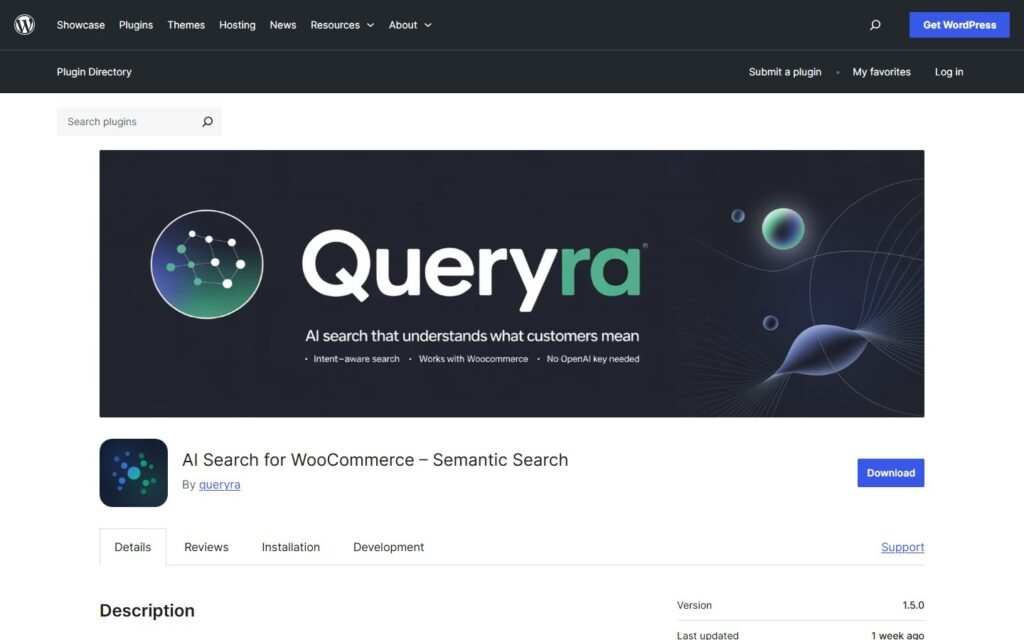
Queryra is an AI search plugin for WordPress and WooCommerce. Its official WordPress.org listing describes a semantic search system that ranks products and content by meaning instead of relying only on exact keyword matches.
That focus addresses a real ecommerce problem. Product titles, categories, and descriptions do not always contain the words a customer uses. A shopper may describe a use case, recipient, desired outcome, price limit, or excluded brand. Conventional search can return irrelevant results, or no results, even when suitable products exist.
Queryra’s documented capabilities include:
- Natural-language and semantic product search.
- Indexing of WooCommerce titles, descriptions, SKUs, categories, tags, prices, stock data, and attributes.
- Intent-aware handling of conditions such as price limits and brand exclusions.
- Live AJAX search suggestions.
- Product boosting controls.
- Automatic indexing when new products are published.
- Search analytics, including zero-result queries.
- Search across WordPress posts, pages, products, and custom post types.
- Support for common page builders, custom fields, and public taxonomies.
- Multilingual semantic search.
- B2B and wholesale search support, including documented B2BKing integration.
- WordPress Connectors API and Abilities API integration on supported WordPress versions.
Queryra uses its own service and API key, so its setup does not require the store owner to maintain a separate OpenAI account. Its official documentation describes an installation flow built around activating the plugin, connecting an API key, importing content, syncing the index, and enabling AI search.
That is a clear and useful product position: make existing WordPress content and WooCommerce inventory easier to discover through natural language.
What Is Niwa AI?
Niwa AI is designed as an operating layer for a WordPress business, rather than a dedicated search replacement.
On the administrative side, Niwa can work with the owner on WordPress and WooCommerce tasks: products, stock, pricing, coupons, posts, pages, troubleshooting, and other site operations. The owner can communicate through conversational channels such as Telegram and WhatsApp instead of opening wp-admin for every request.
On the growth side, Niwa is designed to connect website activity with useful business actions. That can include:
- Publishing and updating WordPress content.
- WooCommerce product and catalog operations.
- Business and store reporting.
- Lead capture and qualification.
- Competitor research and monitoring.
- Buyer-question and conversion workflows.
- Follow-up context for high-intent visitors.
- Product recommendations and guided selling.
- Conversion-focused analysis of recurring visitor objections.
Niwa’s scope therefore extends beyond what happens inside the search field. Search is one point in the customer journey. Niwa is designed to help with the surrounding operations: what gets published, how the catalog is managed, what the owner needs to know, how buyer intent is captured, and what should happen next.
Queryra AI Search vs Niwa AI: Feature Comparison
| Capability | Queryra AI Search | Niwa AI |
|—|—|—|
| Primary purpose | Semantic WordPress and WooCommerce search | WordPress business administration and conversion operations |
| Natural-language product discovery | Yes; core product focus | Supported through conversational product-guidance workflows |
| Replaces default WordPress/WooCommerce search | Yes | Not the primary positioning |
| Search by meaning rather than exact keywords | Yes | Can answer and guide through conversational context, but is not positioned as a dedicated search-index replacement |
| Price and brand intent in search queries | Documented | Can work with product and buyer context; not positioned as Queryra-style semantic search filtering |
| Live search suggestions | Documented | Not the primary interface |
| Search analytics and zero-result queries | Documented | Can support broader business and conversion reporting |
| WooCommerce product administration | No; indexes and retrieves catalog data | Yes |
| Price, stock, coupon, and catalog changes | Not the product’s documented purpose | Yes |
| WordPress post and page publishing | No; indexes published content for retrieval | Yes |
| Telegram administration | Not documented as an owner command channel | Yes |
| WhatsApp administration | Not documented as an owner command channel | Yes |
| Business reporting | Search analytics | Broader operational and commercial reporting |
| Lead capture and qualification | Not a core documented capability | Yes |
| Competitor monitoring | Not a core documented capability | Yes |
| Conversion workflows beyond search | Limited to improving discovery and search relevance | Broader buyer assistance, lead, follow-up, and conversion workflows |
| Best fit | Stores and sites that need stronger internal search | Owners who want an AI operating partner across WordPress, WooCommerce, and growth |
This comparison reflects public product information reviewed on July 19, 2026. Features can change, so buyers should confirm current requirements with each provider.
Where Queryra Does Especially Well
1. Queryra Has a Focused Search Problem to Solve
Queryra does not try to be every kind of WordPress AI tool. Its primary promise is straightforward: understand what a visitor means and return more relevant products or content.
That specialization is valuable. A narrowly focused tool can invest deeply in indexing, ranking, query interpretation, theme compatibility, custom-field extraction, and search analytics.
For stores with a large or complex catalog, improving discovery may produce more value than adding a general chatbot. If customers frequently use descriptive phrases, use cases, budget constraints, or recipient-based searches, semantic search can reduce dead ends.
2. It Works With Existing WooCommerce Catalog Data
According to its official listing, Queryra indexes the information stores already maintain, including product titles, descriptions, SKUs, categories, tags, attributes, prices, and stock data.
That means merchants do not need to rebuild their catalog around a new conversational interface. Queryra’s job is to make existing inventory more discoverable.
3. It Addresses Zero-Result Search Directly
Zero-result searches are commercially useful signals. They can reveal missing synonyms, poorly described products, customer demand, catalog gaps, or language that the merchant did not anticipate.
Queryra documents search analytics that include zero-result queries. This aligns closely with the conversion logic explained in our guide to recovering sales from failed ecommerce searches: a failed search should become a learning opportunity, not the end of the visit.
4. It Supports More Than Basic Product Titles
Queryra publicly documents support for page-builder content, ACF and Meta Box fields, custom taxonomies, and multiple WordPress content types. That matters because valuable product or service information is often stored outside the standard post body.
Its documented WordPress Abilities API integration is also relevant to the emerging WordPress AI-agent ecosystem. It gives compatible agents and plugins a programmatic semantic-search capability rather than requiring each tool to build a search layer from scratch.
Where Niwa AI Has the Broader Advantage
The comparison changes once the requirement moves beyond finding information.
WordPress and WooCommerce Operations
Queryra can index product data and return relevant results, but it is not presented as a system for administering the store. Its documented role is retrieval, not operational change.
Niwa is designed to handle owner requests involving products, inventory, prices, coupons, posts, pages, and other WordPress or WooCommerce work. This is the difference between finding the right product and running the store that sells it.
A founder could ask Niwa to review low-stock items, prepare a product update, publish a comparison article, summarize store performance, or investigate a website issue. Those requests sit outside Queryra’s focused search scope.
Telegram and WhatsApp Administration
Queryra’s public workflow centers on WordPress settings, its dashboard, and the storefront search experience. Telegram and WhatsApp are not documented as owner command channels.
Niwa is designed so the owner can request work through messaging apps. That is valuable when a task is urgent but does not justify opening a laptop and navigating the WordPress dashboard.
The difference is not merely interface preference. Messaging access can shorten the distance between noticing a problem and acting on it.
Content Publishing
Queryra can make posts, pages, products, and custom content easier to find after they have been published. It is not documented as a content-production or publishing agent.
Niwa can support the content workflow itself: research, drafting, WordPress creation, categorization, SEO metadata, publication, and verification. For businesses building organic visibility, that operational loop is materially different from indexing finished content.
Business Reporting
Queryra offers search analytics, which are useful for understanding what visitors type and where search fails.
Niwa’s reporting scope is broader. It can connect site, store, content, and business signals into an owner-facing summary. Search behavior can be one input, alongside sales, products, leads, operational issues, and competitor activity.
Lead Capture and Qualification
A relevant search result helps a visitor continue shopping, but not every valuable visitor is ready to buy immediately. Some need a quote, compatibility confirmation, restock notification, demonstration, or human follow-up.
Niwa is designed to help turn those conversations into structured opportunities. Our AI lead-capture guide explains why collecting contact details alone is insufficient: the useful asset is the combination of contact, intent, urgency, product interest, and the next action.
Lead capture is not documented as Queryra’s central function. Its role is to improve retrieval before that handoff becomes necessary.
Competitor Monitoring
Queryra helps a merchant understand searches occurring on their own site. It is not positioned as a competitor-research or market-monitoring tool.
Niwa can support workflows that examine competitor offers, product positioning, content opportunities, and market changes, then connect those findings with actions on the WordPress site.
That matters because internal search data tells you what your visitors want, while competitor monitoring helps explain what alternatives those visitors may be evaluating.
Conversion Workflows
Queryra can contribute directly to conversion by making products easier to discover. That is a meaningful advantage, especially for stores with weak native search.
Niwa’s conversion scope is wider. It can support product guidance, lead handling, objection analysis, content improvements, follow-up workflows, and targeted store actions. It can also work alongside tools such as the Niwa AI Conversion Booster to connect customer behavior with practical purchase incentives.
The important point is not that one conversion method is universally better. Semantic search solves discovery friction. Niwa addresses discovery plus the surrounding operational and commercial steps.
Which Is Better for WooCommerce?
Choose Queryra when the store’s main pain is catalog discovery:
- Search returns zero results too often.
- Customers describe outcomes instead of using product names.
- The catalog has many attributes, categories, SKUs, or custom fields.
- Multilingual shoppers struggle with exact keywords.
- The team wants better visibility into search queries.
Choose Niwa when the main pain is operational fragmentation:
- The owner needs to manage WooCommerce through conversation.
- Product, stock, price, coupon, and content tasks consume too much time.
- Store data needs to become concise business reporting.
- Leads and high-intent questions require structured follow-up.
- Competitor and content monitoring should produce actions.
- The business wants a broader conversion system, not only better search.
For many stores, the best answer is not strictly either/or. Queryra can be the semantic discovery layer while Niwa acts as the owner’s administrative and growth layer.
A shopper might use Queryra to find the right product through natural language. Niwa can then help the business manage the catalog, answer broader buying questions, capture unresolved intent, publish supporting content, and report what the owner should improve.
Queryra and Niwa Serve Different Search Intent
People searching for “WooCommerce AI search plugin,” “semantic product search,” or “natural-language WooCommerce search” are likely closer to Queryra’s specialist use case.
People searching for “WordPress AI agent,” “AI agent for WooCommerce,” “manage WordPress with Telegram,” or “WordPress business automation” are more likely looking for Niwa’s broader operating model.
That distinction matters when choosing software. A semantic-search plugin should be evaluated on retrieval quality, indexing coverage, speed, analytics, and catalog compatibility. A WordPress AI agent should be evaluated on the range of safe actions it can perform, the channels it supports, the quality of its reports, and whether it can complete useful business workflows.
Final Verdict
Queryra AI Search is a strong candidate for WordPress and WooCommerce sites that need visitors to find products and content by meaning rather than exact wording. Its documented support for natural-language queries, catalog attributes, custom fields, page builders, analytics, multilingual search, and WordPress AI APIs gives it a clear specialist identity.
Niwa AI is the better fit when the owner needs a broader WordPress business agent. It is designed to operate across administration, WooCommerce, messaging, publishing, reporting, lead capture, competitor monitoring, and conversion workflows.
Choose Queryra to make search smarter. Choose Niwa to make the wider WordPress business more operable.
If you want to see how Niwa can fit into your current website and store workflow, book a Niwa demo.
Frequently Asked Questions
Is Queryra an AI agent for WordPress?
Queryra is more accurately described as an AI semantic-search plugin and search connector. On supported WordPress versions, it exposes a semantic-search ability that other compatible agents or plugins can invoke. However, it is not publicly positioned as a general agent for administering WordPress, publishing content, changing WooCommerce data, or operating business workflows.
Does Queryra work with WooCommerce products?
Yes. Its official documentation says it indexes WooCommerce product titles, descriptions, SKUs, categories, tags, prices, stock information, attributes, variations, and other relevant catalog data.
Can Queryra understand natural-language searches?
Yes. Natural-language intent is its central use case. Queryra documents semantic matching as well as interpretation of conditions such as price limits and brand exclusions.
Does Queryra require an OpenAI API key?
No separate OpenAI account is required. Queryra uses its own service and requires a Queryra API key, according to its official setup documentation.
Can Queryra publish posts or edit WooCommerce products?
That is not its documented purpose. Queryra indexes and retrieves site content. Niwa AI is the more relevant choice for owners seeking conversational WordPress publishing and WooCommerce administration.
Does Queryra support Telegram or WhatsApp administration?
Telegram and WhatsApp are not documented as Queryra owner-administration channels. Niwa AI is designed to let owners communicate and request work through those messaging platforms.
Can Queryra and Niwa AI be used together?
Potentially, yes. Their roles are complementary: Queryra can improve semantic search and product discovery, while Niwa can support broader site operations, content, reporting, leads, monitoring, and conversion workflows. Compatibility should still be tested on the specific WordPress stack before production deployment.
Which tool is better for lead generation?
Niwa is the better fit for explicit lead capture, qualification, context collection, and follow-up workflows. Queryra may help more visitors reach relevant products or pages, but lead management is not its primary documented feature.